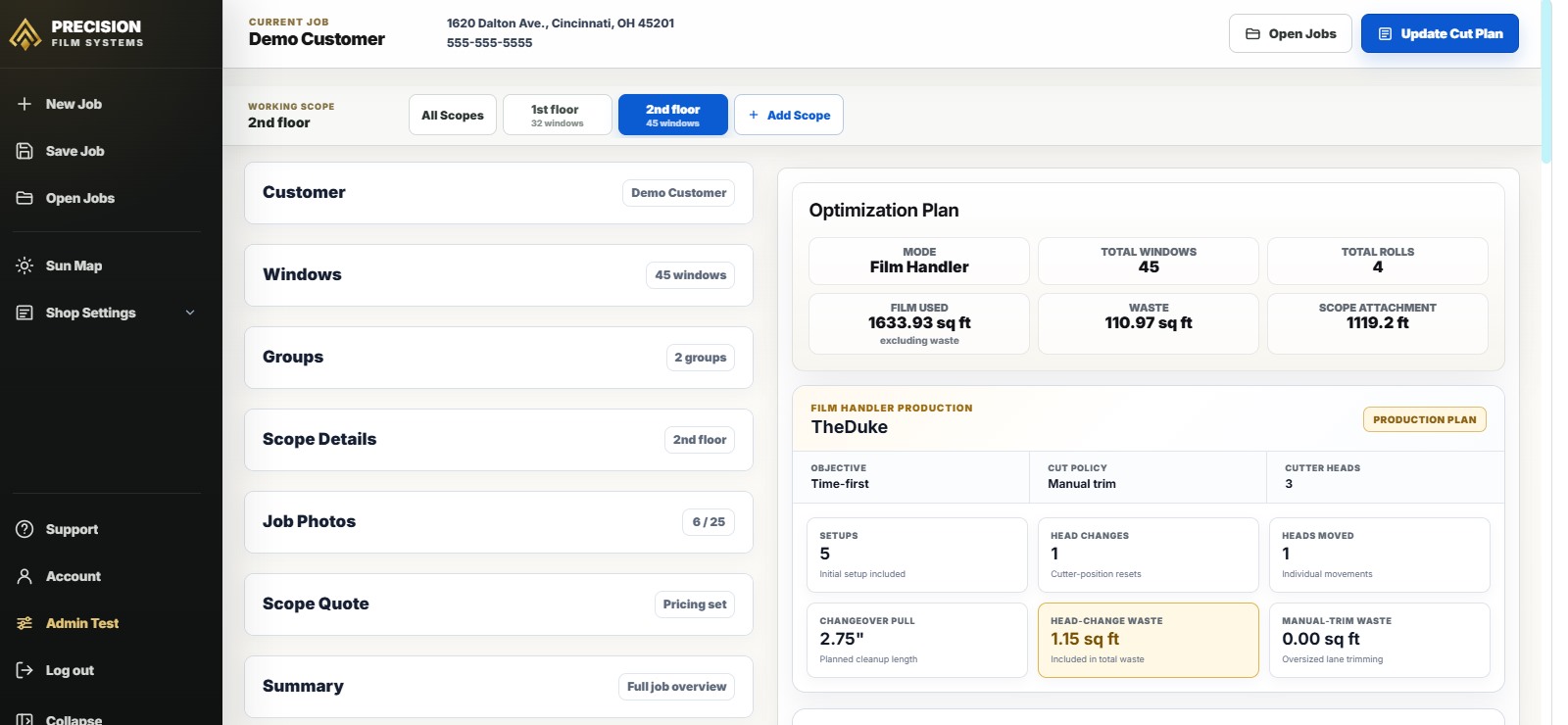
- Material efficiency
- 67.9%
- Linear feet needed
- 65.0 ft
- Total area
- 464.54 sq ft
- Waste
- 32.1%
- Waste square footage
- 83.50 sq ft
Four windows do not fit this roll width, so the lower linear-foot result is incomplete rather than a workable plan.
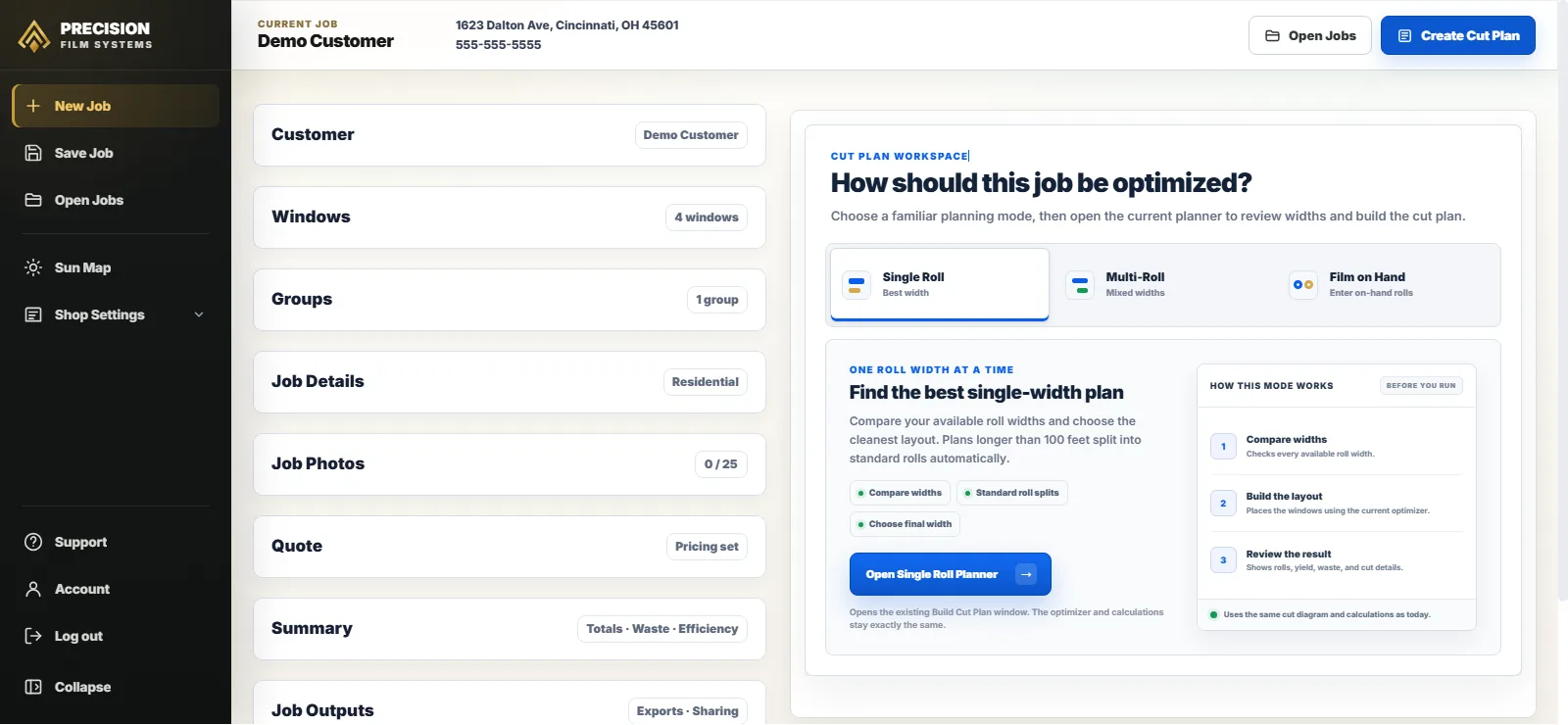
Enter residential or commercial flat-glass pane sizes and quantities, compare roll-width strategies, save the selected plan, and hand off a Visual Cut Diagram and Window List.
Try Solo lets you run one real job through the core Solo and Flex workflow. Optional Shop modules are not included.

Precision Film Systems works between measured residential or commercial flat-glass work and the material, pricing, estimate, and production decisions that follow.
It is not CRM, scheduling, accounting, invoicing, payment collection, persistent inventory, automotive pattern software, machine control, or a compatibility-approval system.
Core planning works without configuring every Shop module. Shop capabilities are optional extensions of the same measured project.
The simplest Precision Film Systems workflow stays focused on the physical material plan.
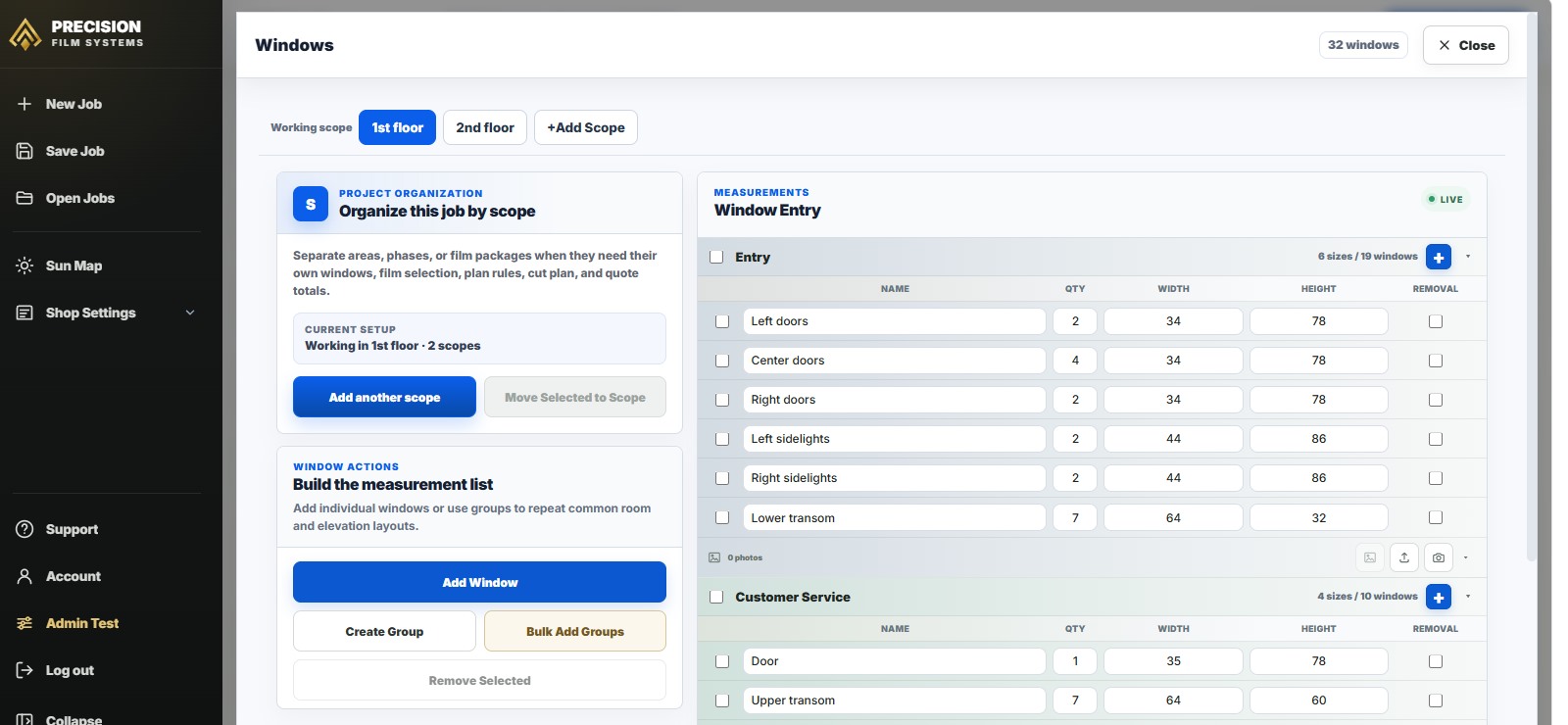
Add width, height, and quantity for each unique residential or commercial flat-glass size.
Review complete fit, planned footage, material efficiency, cut-layout waste, and orientation across available widths.
Choose the material strategy the shop intends to use after reviewing the visible result and practical constraints.
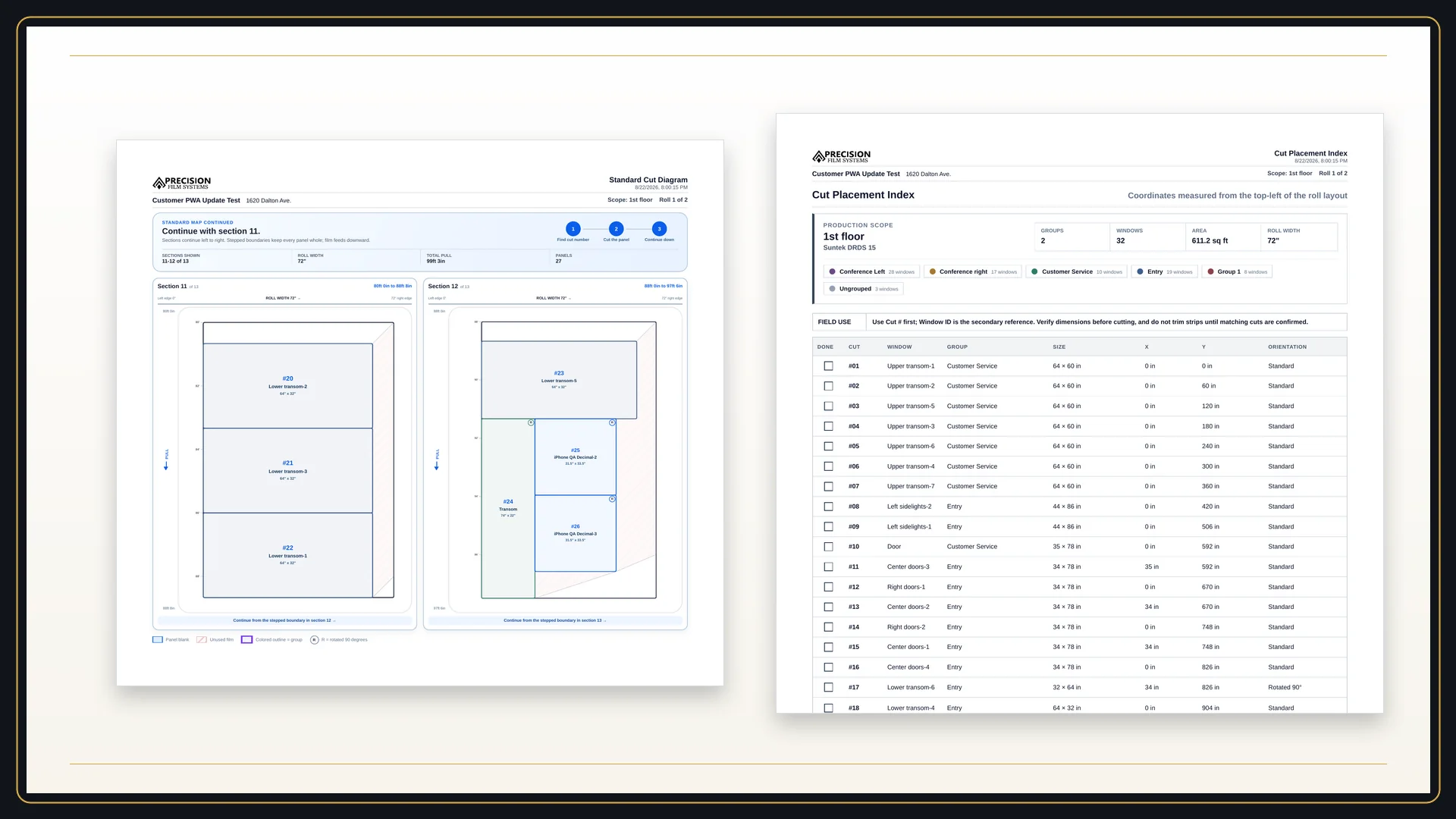
Generate the Visual Cut Diagram and Window List for the person preparing or cutting the film.
Return to the plan, diagrams, and result views without rebuilding the pane list.
Read how planning calculations work and how saved plan currentness is checked.
Roll-width comparison is one part of material planning. Review fit, linear feet, efficiency, and waste side by side, then weigh the inventory, handling, ordering, and production constraints that affect the final decision.
The answer depends on more than square footage.
Four windows do not fit this roll width, so the lower linear-foot result is incomplete rather than a workable plan.
In this comparison, the 60 inch roll has the highest efficiency and lowest waste shown. Purchase length, inventory, handling, and shop constraints still matter.
The 72 inch roll uses fewer linear feet than the 60 inch option but shows slightly more waste. It remains viable when the wider roll better fits the shop's material or production needs.
Example shown from a 29-window job run in Precision Film Systems using the same measurements across standard roll widths. See how a window film optimizer supports the roll-width decision, explore the broader architectural flat glass workflow, or compare the same job with the window film waste calculator.
A material plan should lead to usable production information. Precision Film Systems creates Visual Cut Diagrams and window lists from the measured job so the film can be prepared from the same selected strategy whether it is cut by the owner, an installer, or someone else in the shop.
The plan becomes part of the handoff: measured windows, roll decisions, cut placement, and job structure stay connected when the work moves to the next person.
Shop adds independent Scopes, finite Film on Hand planning, customer estimates, purchasing requirements, machine-aware production planning, and project context. Core planning does not require the Film Catalog, pricing presets, company information, Group Presets, Film Handler profiles, Sun Map, or estimate settings to be configured first.
Create independent planning sections with their own panes, Groups, film, pricing, photos, cut plan, and production plan.
Compare Groups and ScopesPlan against physical rolls entered with actual usable widths and finite positive usable lengths, then Finish Remaining on standard material.
Plan finite physical rollsCreate optional user-managed film records for widths, pricing, warranties, estimates, and Film Handler cut policy.
Review Film Catalog fieldsFinalize an exact estimate revision, share its secure link through the user's apps, and record the customer's response.
Review estimate integrityUse saved machine profiles to create production plans and operator setup instructions without controlling the machine.
Review operator guidancePrepare roll-aware purchasing requirements by physical roll, film, width, Scope, and Group. Precision Film Systems does not place the order.
Review purchasing outputKeep visual job context with the relevant Scope and add an optional exposure-awareness view for presentation.
Understand Sun MapChoose the exact estimate, purchasing, project, cutter, combined, or Film Handler output required for the handoff.
Open the output matrix

Supported Shop workflows reuse customer, Scope, pane, film, pricing, and planning information. Physical output checks for missing or stale required plans. Finalized estimates remain exact revision snapshots, and customer responses stay tied to the revision that was shared.
Precision Film Systems is flat-glass job-planning software built around the measured job and the cut plan. It connects the material and production decisions surrounding residential and commercial window film work.
Cut optimization is part of the system, but the deeper workflow can also account for multiple planning modes, partial rolls, scopes, estimates, job context, production output, and Film Handler-specific planning when those features are included in the selected plan.
Try Solo lets you run one real job through core Solo and Flex planning: standard roll comparisons, film metrics, a Visual Cut Diagram, and a window cut list. It does not include Shop features.
No. Precision Film Systems is a specialized flat-glass planning layer that can work alongside the broader systems a shop already uses. It also supports professional judgment rather than replacing it.
Try the core Solo cut-planning workflow, or compare plans to see how Precision Film Systems extends the measured job into partial-roll planning, scopes, estimates, Film Handler planning, and connected job output.
Send the measurements, quantities, scopes, film types, costs, roll details, groups, security-film information, and whatever else makes the job difficult. The job is prepared through the relevant Precision Film Systems workflow and the results are returned by email.
This can be a real job you are planning. Nothing is built live in front of you, no sales call is required, and the offer is strictly limited to one handoff per company.