
Choose a learning path
Start with the kind of decision you need to make, then follow the related articles in a more useful order.
Getting Into Flat Glass
Move from evaluating the opportunity through business readiness, first residential work, material planning, marketing, commercial projects, and job review.
Open the complete learning pathTurn measurements into material decisions with roll-width comparisons, linear feet, waste, cut planning, and quoting preparation.
Open pathReview the job conditions that should slow down a recommendation, including Low-E, glass type, shading, exposure, and manufacturer guidance.
Field guide: Read glass stamps and identify glass construction.
Open pathPlain-English explanations of common architectural film terms, spec-sheet language, and performance metrics.
Open pathUse app workflows together so job information can move from measurement to planning to quote-ready output with less rework.
Open pathFeatured article
Emissivity and Low-E: Plain-English Definitions
Emissivity explains how a surface gives off radiant heat. Low-E glass uses a coating to control that heat transfer, which is why Low-E should trigger a compatibility check before film is recommended.
Read article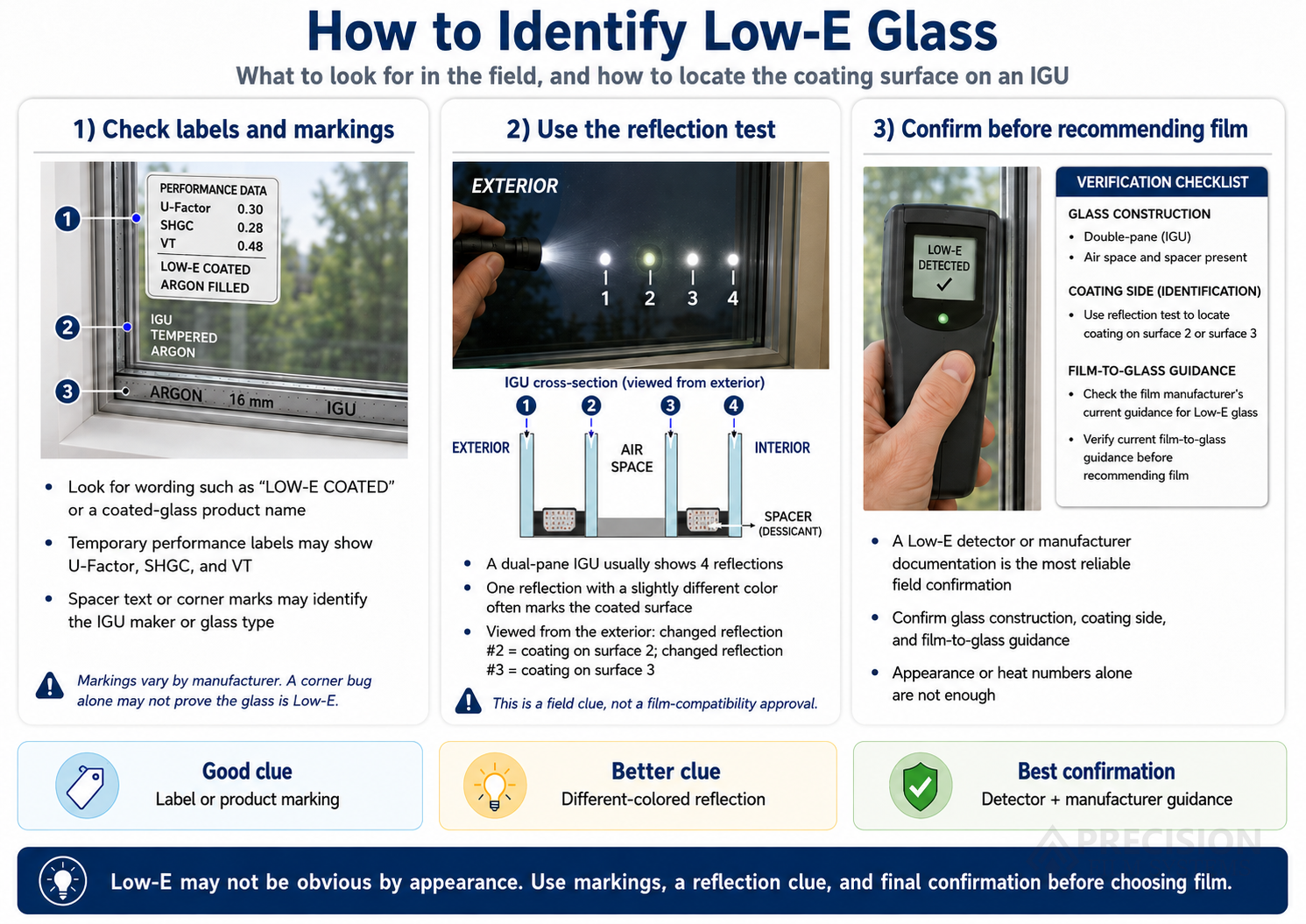
Plan material, production, and job handoff
Go deeper into the decisions that connect measured panes to stocked film, scopes, estimates, production, and the field information the crew needs.
Planning Flat Glass Cuts Around a Film Handler
Build cut plans around the Film Handler profile and production preferences used by the shop.
Read articleWhen One Flat Glass Job Needs More Than One Cut Plan
Split one customer project into user-defined planning sections without turning it into separate customer jobs.
Read articleUsing Film on Hand to Plan Around Partial Rolls
Plan around partial rolls using their actual width and usable length, then see what remains to order.
Read articleBefore You Pull a Stocked Roll, Compare the Widths
If you keep one or several roll widths in stock, compare them before pulling film to see which option uses the material best.
Read articleTurning a Flat Glass Job Into a Customer Estimate
Build the customer estimate from the job, attach reusable information, share it, and keep the response connected to the project.
Read articleWhat to Write Down Before You Leave the Job Site
Keep measurements, glass and film details, access notes, scope decisions, photos, and open questions connected before the estimate or cut plan is built.
Read articleFor automotive tint shops expanding into residential or commercial work
Follow the differences in glass identification, film selection, estimating, roll planning, pricing, and commercial workflow without treating flat glass like a vehicle-pattern job.
How Automotive Tint Shops Can Add Residential and Commercial Flat Glass
A practical guide for automotive tint shops adding residential and commercial flat glass, including glass identification, film compatibility, quoting, material planning, and job workflow.
Read articleFlat Glass Estimating for Automotive Tint Shops
Learn how to estimate residential and commercial flat-glass window film from measured panes, film selection, material planning, labor, access, removal, and the actual job scope.
Read articleAutomotive Window Tint vs Flat Glass: How Estimating, Film Planning, and Cutting Differ
Compare automotive and flat-glass window tint workflows, including job inputs, film selection, estimating, roll planning, cutting, and installation handoff.
Read articleHow to Price Your First Residential Window Film Job
Build a residential window film price from the measured scope, film cost, material plan, labor, removal, access, overhead, and the job your shop is actually quoting.
Read articleChoosing Window Film Roll Widths When Your Tint Shop Adds Flat Glass
Learn how to choose flat-glass window film roll widths from pane dimensions, linear feet, cut layout, order length, handling, waste, and usable remainder.
Read articleFrom Vehicle Tinting to Commercial Window Film: What Changes in the Shop Workflow
See how commercial window film changes the shop workflow, from measured scopes and multiple films to material planning, estimating, phased work, cutting, and installer handoff.
Read articleProduct fit and repeatable shop setup
Clarify where Precision Film Systems fits and prepare the settings a shop uses from one measured job to the next.
What Precision Film Systems Is and What It Is Not
A practical Q&A on where Precision Film Systems fits-and what it is not trying to replace.
Read articleSet Up the Things Your Shop Uses Again and Again
Save recurring group names and pricing settings, then use or adjust them when the job calls for it.
Read articleSee Precision Film Systems in action
Want to test the optimization process? The free demo turns one job's measurements into standard roll-width comparisons, film metrics, cut diagrams, and a window cut list. Shop features, quote-ready workflows, and Shop settings are not included.
Build the complete flat-glass workflow.
Approved guides for the work that starts before the first quote and continues through installation, follow-up, and job review.
How to Quote Your First Commercial Window Film Job
A commercial window film quote needs more than square footage and a film price. Build the scope around the measured glass, material plan, labor, access, removal, logistics, phases, assumptions, and exclusions.
Flat Glass Estimate Checklist for Automotive Tint Shops
A practical estimate checklist for automotive tint shops and newer flat-glass operators, covering the measured scope, material plan, labor, access, removal, price, and final customer review.
How to Market Residential Window Film to Your Existing Automotive Customers
Use the trust your automotive tint shop has already earned to introduce residential window film with a clear offer, useful proof, appropriate customer contact, and an easy next step.
How to Add Residential and Commercial Window Film to Your Website
Build a credible website path for residential and commercial window film without burying the service, overbuilding the site, or promising results before the glass and property have been evaluated.
Residential vs Commercial Window Film: Where Should an Automotive Shop Start?
Residential is not automatically easier, and commercial is not automatically too advanced. Compare the work your shop can evaluate, sell, document, price, and support before choosing where to begin.
What to Set Up Before You Start Selling Flat Glass
Before accepting flat-glass work, give your shop a clear service offer, a place for job records, and a process for deciding when it can quote, order, and schedule.
How to Handle Your First Residential Window Film Lead
Learn to steer the first homeowner conversation, use early site visits to build experience, and recognize when reliable information can support a remote estimate.
Commercial Window Film Site Surveys: What to Capture Before Quoting
A commercial survey should leave the estimator with a defined scope and usable evidence. Follow a small-office example from pane records to unresolved questions.
Organizing Commercial Window Film Jobs by Areas, Floors, and Elevations
Keep the pane's location stable when film choices, installation phases, or customer requests change. Follow a complete example from the original schedule to a revised proposal.
How to Photograph Flat-Glass Projects for Marketing
Plan the photos before installation, keep comparisons honest, and give your website or marketing person a usable set of images with accurate project details.
From an Accepted Flat-Glass Quote to an Installation Handoff
Prepare the information and site arrangements that let an installer carry out the accepted work, with practical home and occupied-office examples.
Completing a Flat-Glass Job: Customer Walkthrough, Aftercare, and Follow-Up
Give customers a clear record of the completed work, the care information for their film, and a dependable next step when something needs attention.
Reviewing Your First Flat-Glass Jobs: Estimated vs Actual Results
Use a worked job example to separate film purchased, material consumed, usable remainder, labor, and the money left to cover overhead.
Finding Your First Local Commercial Window Film Customers
Start with commercial work the shop can support, use relevant introductions and honest proof, and find out who can move the property decision forward.